Sage essential oil is one of the most powerful and versatile extracts from the Salvia officinalis plant. Obtained through steam distillation of the leaves, this oil contains the active compounds of the sage plant, such as thujone, cineole, and camphor, which give it numerous therapeutic properties.
Used for centuries in herbal traditions to provide relief and many benefits, today it is highly valued for its use in a wide range of herbal preparations.
1. Properties of Sage Essential Oil
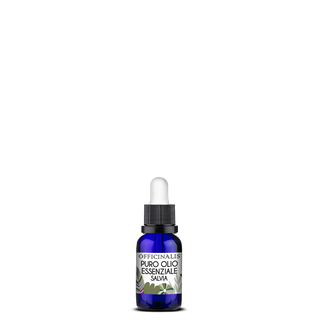
Pure sage essential oil possesses a number of beneficial properties that make it a valuable ingredient in herbal medicine. This is particularly true if made from fresh leaves, such as Pure Officinalis Sage Essential Oil. Officinalis, in fact, grows organic sage and uses it immediately after harvesting, as it is richer in active ingredients than dried leaves.
The main properties of the sage plant according to herbal medicine are:
- Antimicrobial: helps against bacteria, viruses, and fungi.
- Anti-inflammatory: useful for soothing both internal and external inflammation.
- Astringent: tightens tissues and helps heal wounds.
- Carminative: helps eliminate intestinal gas.
- Nervine tonic: stimulates the nervous system, improving concentration and memory.
- Hormone balancer: supports menstrual cycle regulation and relieves menopausal symptoms.
2. Use of Sage Essential Oil in Herbal Preparations
Pure sage essential oil is extremely versatile and can be used in various herbal preparations, both internally and externally. Here are some of its most common applications:
a. Massages to relieve muscle and joint discomfort
Thanks to the anti-inflammatory and analgesic properties of the sage plant, pure essential oil is a valuable natural ally for reducing muscle and joint discomfort and rheumatism. For use, it must be diluted with a carrier oil, such as sweet almond or jojoba oil, in the following proportion:
- Recipe for a massage oil: dilute 5-6 drops of sage essential oil in 30 ml of carrier oil. Apply directly to the painful areas and massage gently.
b. Treatment for sore throat and oral infections
The antimicrobial properties of the sage plant give pure sage essential oil the power to soothe a sore throat, as well as usefulness against canker sores or stomatitis. It is used in diluted form for gargling or as a mouthwash:
- Recipe for a natural mouthwash: add 2-3 drops of sage essential oil to a glass of warm water. Use the solution for oral rinses or gargling twice a day.
c. Aromatherapy to improve concentration and mood
The aroma of pure sage essential oil has a stimulating effect on the nervous system, helping to improve concentration, stimulate memory, and combat mental fatigue. It is particularly useful during periods of stress or exhaustion.
- Use in aromatherapy: diffuse 3-4 drops of sage essential oil in an environmental diffuser. Inhaling aromatic vapors can help improve mood and concentration.
d. Menstrual cycle regulation and relief from menopausal symptoms
Sage essential oil is known for its hormone-balancing properties in women. It is useful for regulating irregular menstrual cycles, reducing cramps, and relieving menopausal symptoms, such as hot flashes and night sweats.
- Recipe for a menstrual relief oil: mix 3 drops of sage essential oil with 20 ml of sweet almond oil. Gently massage the abdomen during the menstrual cycle to relieve cramps and discomfort.
e. Treatment for oily and acne-prone skin
Thanks to its astringent and antibacterial properties, sage essential oil is useful for reducing sebum production and treating acne-prone skin. It helps purify pores and prevent the appearance of new blemishes.
- Recipe for a purifying face lotion: add 1-2 drops of sage essential oil to 10 ml of rose or witch hazel water. Apply gently to the face with a cotton pad to reduce oiliness and tone the skin.
f. Natural deodorant
Sage essential oil is known for its deodorizing properties, which help neutralize unpleasant odors and regulate excessive sweating. It can be used in the preparation of natural deodorants or added to baths.
- Recipe for a natural deodorant: mix 3 drops of sage essential oil with 15 ml of coconut oil and 10 drops of lavender essential oil. Apply to the armpits for a natural, refreshing deodorizing effect.
3. Precautions in Using Sage Essential Oil
Despite its numerous benefits, it is important to use sage essential oil carefully, as it can be toxic at high doses, mainly due to its thujone content. Some precautions to keep in mind:
- Do not ingest sage essential oil unless prescribed by an herbal medicine expert.
- Avoid prolonged use or the application of high doses.
- Avoid use during pregnancy and breastfeeding: sage essential oil can stimulate uterine contractions and interfere with milk production.
- Perform a skin test before use to check for any allergic reactions.
Conclusions
Pure sage essential oil is a valuable remedy in modern herbal medicine, thanks to its antimicrobial, anti-inflammatory, and hormone-balancing properties. Used correctly, it can provide numerous health benefits, both internally and externally. Always remember to consult an expert before using essential oil, especially if you have any particular health conditions or are pregnant.
By incorporating this powerful oil into your routine, you can make the most of sage's properties for natural, comprehensive well-being.