What is a phytocomplex?
A phytocomplex is the collection of natural chemical substances present in a plant, or in a part of it (leaves, flowers, roots, bark, etc.).
These natural substances contribute to the therapeutic or beneficial effects of that plant. The term derives from the words "phyto" (plant) and "complex" (collection), and indicates how each component of a plant interacts with the others to produce an overall beneficial effect.
These substances include not only the main active principles, but also secondary compounds, such as flavonoids, terpenes, essential oils, polyphenols, alkaloids, vitamins, and minerals. Although some active principles can be extracted and used separately, the phytocomplex refers to the synergistic effect of all the substances together, which can often be more effective and safer than the isolated use of a single active principle.
In phytotherapy, the phytocomplex approach is preferred to maintain a natural balance between the substances, with the aim of reducing side effects and increasing therapeutic benefits.
Some examples of phytocomplexes
Here are some examples of phytocomplexes for medicinal plants such as rosemary, arnica, and lavender, which show how different components work together to produce beneficial effects:
1. Rosemary (Rosmarinus officinalis)
The rosemary phytocomplex is composed of:
- Essential oils: cineole, camphor, borneol, and alpha-pinene (stimulants, anti-inflammatory, and antioxidant).
- Flavonoids: quercetin, rutin, and apigenin (antioxidant and protective for the cardiovascular system).
- Rosmarinic acid: with anti-inflammatory and antioxidant properties.
- Triterpenes: ursolic acid, which has antimicrobial and antitumor properties.
- Carnosol: with antioxidant properties.
Effects: stimulates blood circulation, has anti-inflammatory, digestive, antioxidant, and antimicrobial properties.
At OFFICINALIS, we harvest and produce Rosemary Essential Oil and Rosemary Shampoo from rosemary plants grown organically in our fields in the Berici Hills, in Vicenza.
2. Arnica (Arnica montana)
The arnica phytocomplex includes:
- Sesquiterpene lactones: in particular helenalin and dihydrohelenalin, which are the main anti-inflammatory and analgesic compounds.
- Flavonoids: such as quercetin and isorhamnetin (antioxidant and anti-inflammatory).
- Essential oils: thymol, which has antimicrobial properties.
- Tannins: with an astringent and healing effect.
- Terpenes: in particular triterpene glucoside, with an analgesic effect.
Effects: reduces inflammation, pain, and swelling, especially in bruises, sprains, and muscle pain.
For an effective product, it is important to be able to extract and work with the entire phytocomplex of a plant. Many products on the market that boast high percentages of active principles contain only some properties, and therefore a limited part of the phytocomplex.
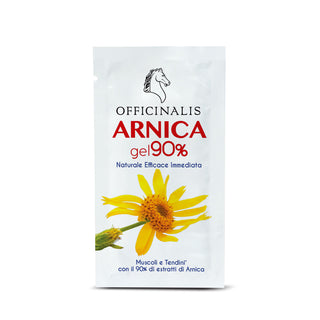
We at OFFICINALIS know well the extraordinary effects of this plant and the potential of its complete phytocomplex, in fact the Arnica Gel 90% line for human use was born from the success of the famous Arnica for Horses that used the world champion Varenne .
Made with 5 extracts (instead of one or two, as happens with an average product in the same category), theArnica gel 90% extracts the entire phytocomplex, so as to obtain all the benefits of the plant.
A true best seller that for 22 years has been improved and developed: theoriginal arnica for horses for human use that has won all over the world.
3. Lavender (Lavandula angustifolia)
The lavender phytocomplex contains:
- Essential oils: linalool and linalyl acetate (main active principles with a relaxing, anxiolytic, and antispasmodic effect).
- Coumarins: with sedative and calming properties.
- Flavonoids: with antioxidant activity.
- Tannins: which contribute to astringent and healing properties.
- Terpenes: substance unpleasant to the sense of smell of flying insects.
Effects: acts as a nervous system relaxant, with calming, anti-inflammatory, antimicrobial, and healing properties. It is also appreciated for its power to keep mosquitoes and flying insects away.
Lavender flowers, in essence, not only promote sleep and relaxation, but are also recommended to improve mood and to protect summer evenings from mosquitoes and insects. They too are grown here by us organically. We use their fresh flowers to produce Lavender Fragrance Water , the Butter , Body Oil but above all the Lavender 90% Protective Gel

Conclusion:
In each of these plants, the phytocomplex works in synergy to produce complex therapeutic effects, improving efficacy and minimizing side effects compared to individual active principles used in isolation.
- High percentages of active extracts do not mean greater efficacy. High percentages can be achieved with a single property. However, in phytotherapy, the phytocomplex approach is preferred because it increases therapeutic benefits and reduces side effects.
- Choose products made with the entire phytocomplex of the plant, as they are more effective than products made with a part of the phytocomplex.
- Discover the line of Officinalis cosmetics, made with 90% active extracts coming from the entire phytocomplex of the plant.